Experiment 626 Is the Starting Point of Stitch
Experiment 626 is the designation behind Stitch, and knowing it explains why Lilo and Stitch treats its alien hero as both a threat and family.
A 2002 animated classic about an unlikely friendship, a Hawaiian family, and the meaning of ohana. Meet Lilo, Nani, and Stitch, then explore the story, characters, music, and legacy behind the film.

Lilo and Stitch is an animated science fiction comedy-drama. It was released in theaters in the United States on June 21, 2002, after a premiere at the El Capitan Theatre in Los Angeles on June 16, 2002. The film was produced on a budget of $80 million and grossed $273.1 million worldwide, which made it a commercial success for Walt Disney Feature Animation during a period when hand-drawn features were central to the studio.
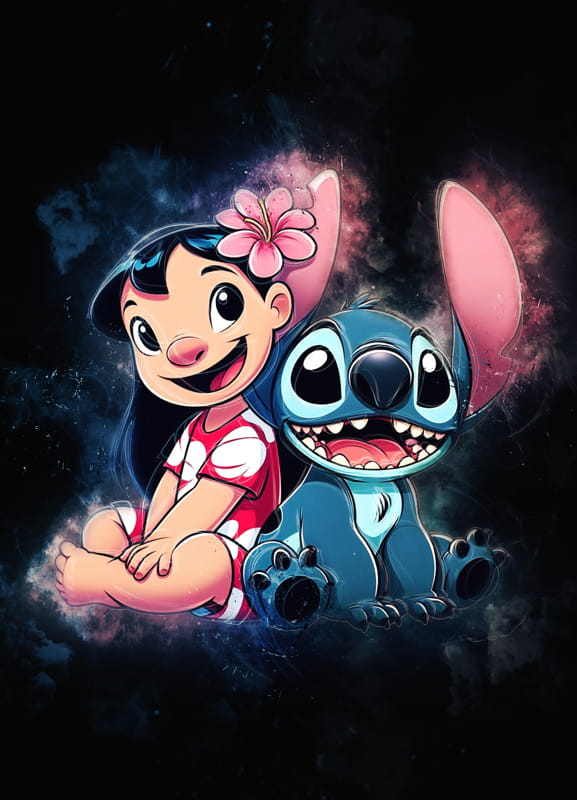
This site covers every major part of the film and its franchise. Explore the story and its themes, production history, characters, Hawaiian culture, music, sequels, television series, and the 2025 live-action remake. Each section explains its subject in plain terms and presents facts that can be checked against the film and its credits.
The film is a study in careful storytelling. Stitch begins as a destructive creature with a single purpose, and the movie shows how he changes through his bond with a lonely sister. Lilo is a complete character in her own right, and Nani, her older sister, carries the responsibility of keeping the family together. The emotional core of the film lives in those relationships.
The film is set on Kauai, the fourth largest island in the Hawaiian chain. The story begins on the distant planet Turo, where the United Galactic Federation convicts Dr. Jumba Jookiba of illegal genetic experimentation. Jumba created Experiment 626, an aggressive and nearly indestructible creature with advanced learning abilities. Experiment 626 escapes during his transport and crash-lands on Earth, which sets the entire plot in motion.
The production team used hand-drawn two-dimensional animation, which was a deliberate choice because the budget could not support computer-generated imagery for the whole film. The backgrounds were painted in watercolor, a technique that Disney had largely abandoned after the 1940s. The result gives the film a bright, storybook look that is immediately recognizable.
The film mixes family drama with science fiction. The aliens are comic and menacing, while the human story deals with grief, poverty, social services and the fragile bond between two sisters. This combination is the reason the film appeals to younger children and to adults in equal measure. It treats its audience as capable of following emotional material, and it trusts its jokes to land without a constant stream of noise.
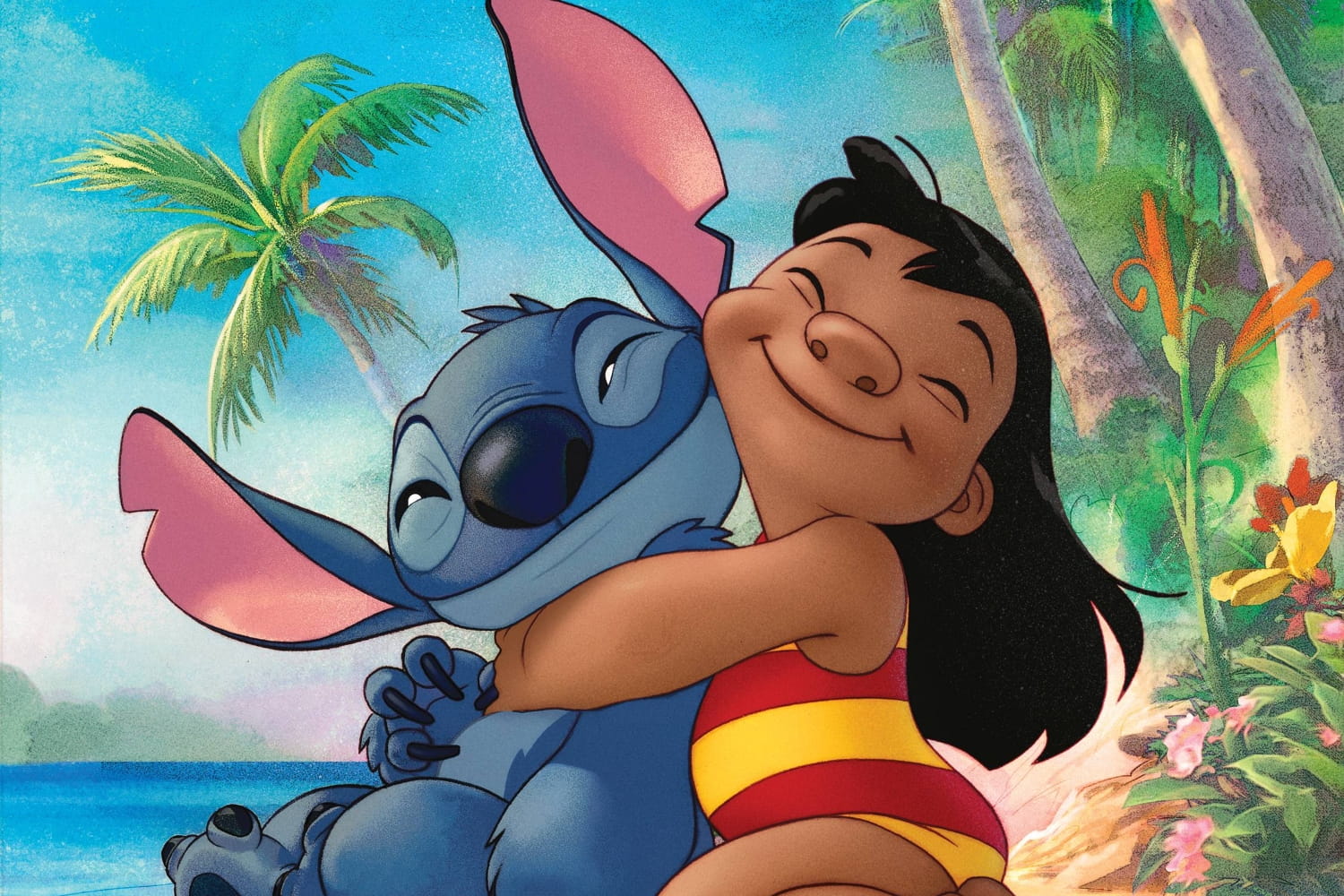
Three characters drive the story. Lilo is a lonely, imaginative and stubborn girl who wants a friend. Nani is her older sister, who has become the legal guardian of Lilo after their parents died in a car crash, and who is trying to hold a job and a home together. Stitch is the alien who arrives as a weapon and gradually discovers what it means to belong to a family.
The plot uses a clear structure. Stitch is adopted by Lilo and causes constant trouble, which threatens Nani's employment and her custody of Lilo. Social worker Cobra Bubbles warns that Lilo could be placed in foster care if the family does not improve. Meanwhile, Jumba and Agent Pleakley pursue Stitch across the island, and the chase eventually destroys the Pelekai house. The climax brings every thread together when Stitch recognizes the value of ohana and helps rescue Lilo.
The film is often praised for how it handles its ending. The conflict is resolved through character choices rather than through spectacle alone. Stitch is allowed to stay on Earth, the Pelekai family is placed under the protection of the Galactic Federation, and the final sequence shows Lilo, Nani, Stitch, Jumba, Pleakley, David and Bubbles rebuilding the house as a family.
The story of Lilo and Stitch is a story about rejection and belonging. Stitch is designed to destroy, and his first instinct is to escape the Galactic Federation. Lilo is designed by nobody, yet she is alone in a world that has taken her parents and left her with an older sister who is barely managing. The two characters meet because each of them is looking for a place to fit, and the film keeps returning to that shared need.
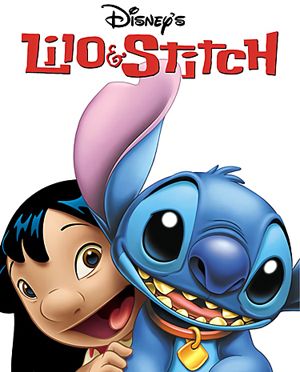
Experiment 626 crash-lands on Kauai, where he is struck by passing trucks and taken to an animal shelter. Nani takes Lilo to the shelter to adopt a dog after overhearing her younger sister wish for a friend. Lilo chooses the creature that is pretending to be a dog. She names him Stitch, and their relationship begins with a bond that neither of them fully understands.
The early scenes establish the comedy of the film. Stitch is rude, reckless and fascinated by the human world. He destroys property, causes accidents and mimics the behavior of the people around him. Lilo, meanwhile, makes a serious effort to treat him as a pet, teaching him rules and trying to make him a model citizen. Their mismatched attempts at normal life drive the first half of the film.
The pressure on the Pelekai sisters grows steadily. Nani loses her job at the Lūʻau after Stitch attacks Pleakley during a shift, and she struggles to find new work while Stitch continues to sabotage her attempts. Bubbles gives the family a short deadline, and Nani's future with Lilo hangs on whether the household can prove it is stable. The film does not ignore the cost of these problems, and it shows how exhausting it is to care for a child alone.
During a surfing trip, Stitch accidentally pulls Lilo underwater. Nani rescues her, and David rescues Stitch. The incident convinces Bubbles that Lilo is not safe and that he should return to take her. Stitch then runs away, believing that he has ruined everything, and the film moves into its darkest stretch. Jumba and Pleakley are dismissed for failing to capture Stitch, and Captain Gantu is assigned the mission instead.
Jumba, no longer restrained by the Federation, pursues Stitch with more aggressive tactics. The chase brings the battle back to the Pelekai home, where an explosion destroys the house. Nani, while trying to take the new job she has finally found, returns home to find the fire and the arrival of Bubbles. Lilo runs into the woods and meets Stitch, who reveals his true alien form just before Gantu captures both of them.
Nani confronts Stitch, and then Jumba and Pleakley capture him too. When Nani begs for Lilo's rescue, the agents refuse because they are only authorized to retrieve Stitch. Nani breaks down, and Stitch recalls ohana, the principle that Lilo taught him. He convinces Jumba to help, and the group boards Jumba's spacecraft to pursue Gantu and bring Lilo home.
The Grand Councilwoman arrives to take Stitch back, but she discovers that Stitch has changed and that Lilo legally adopted him from the shelter. She dismisses Gantu for endangering Lilo and failing his mission. She allows Stitch to remain on Earth to serve his exile, and she places the Pelekai family under the protection of the United Galactic Federation. Bubbles then reveals that he is a former CIA agent who previously met the Grand Councilwoman in Roswell, New Mexico, in 1973.
The closing montage shows the family growing together. Stitch, Jumba and Pleakley become part of the household, and the house is rebuilt with help from David and Bubbles. The story ends where it began, with Lilo and Stitch as a pair, and with the idea that a family is defined by commitment rather than by blood alone.
The history of Lilo and Stitch begins in the 1980s and continues through the animated film, the sequels, the television series and the live-action remake. The table below lists the major releases in the order they arrived. Each entry records the year, the format and the main point of interest for readers who want to understand how the franchise developed.
Chris Sanders created the character of Stitch during the 1980s for a children's book pitch. The book was not completed, but the creature stayed with Sanders. He joined Walt Disney Feature Animation in 1987, when the studio formed its visual development department. He later worked on storyboards for several Disney features, and he was promoted to head of story on Mulan in 1998.
In 1997, Disney Feature Animation executives discussed the studio's future slate of films. Thomas Schumacher, then the executive vice president of the division, asked Sanders to develop a film that would be the "Dumbo for our generation." Sanders produced a 29-page pitch book, and Schumacher approved the project on the condition that the final look would reflect Sanders's own drawing style.
| Year | Title | Format | Key point |
|---|---|---|---|
| 2002 | Lilo and Stitch | Animated feature film | Written and directed by Chris Sanders and Dean DeBlois, premiered June 16, released June 21 |
| 2002 | Lilo and Stitch (home media) | VHS and DVD | Released on December 3, 2002, with the THX-certified disc and bonus features |
| 2003 | Stitch! The Movie | Direct-to-video film | Released August 26, 2003, and served as the pilot for the television series |
| 2003 to 2006 | Lilo and Stitch: The Series | Television series | 65 episodes that aired between September 20, 2003, and July 29, 2006 |
| 2005 | Lilo and Stitch 2: Stitch Has a Glitch | Direct-to-video film | Released August 30, 2005, set between the original film and Stitch! The Movie |
| 2006 | Leroy and Stitch | Television film | Aired June 23, 2006, and ended the Hawaii-set storyline |
| 2008 to 2011 | Stitch! | Japanese anime series | Set on a fictional island in Okinawa Prefecture with a new lead character |
| 2017 | Stitch and Ai | Chinese animated series | Aired in China from March 27 to April 6, 2017, with a Mandarin dub |
| 2025 | Lilo and Stitch | Live-action film | Released May 23, 2025, directed by Dean Fleischer Camp |
The film premiered at the El Capitan Theatre in Los Angeles and reached American theaters five days later. It opened in second place on its first weekend and earned $145.8 million in the United States and Canada. Its total worldwide gross reached $273.1 million, and the film became a franchise anchor for Disney during the 2000s.
The film was nominated for Best Animated Feature at the 75th Academy Awards. The award went to Spirited Away. The nomination confirmed the film's standing among critics, and it marked an important moment for hand-drawn Disney animation at a time when computer animation was reshaping the medium.
Stitch! The Movie arrived in August 2003 and set the stage for the television series. Lilo and Stitch 2: Stitch Has a Glitch followed in 2005. In that film, Stitch experiences a malfunction because his molecules were never fully charged, and Lilo tries to win the May Day hula contest while managing his outbursts. The sequel also contradicts the events of the promotional comics that ran in Disney Adventures before the original film, which is why those comics are not part of the canonical story.
Lilo and Stitch: The Series ran for 65 episodes. It followed Lilo and Stitch as they captured and rehabilitated the other experiments created by Jumba. The series expanded the world of the franchise and introduced a wide cast of experiments, each with a distinct personality and power. It ended with the television film Leroy and Stitch, which concluded the original Hawaii-based storyline.
The franchise also reached audiences in other countries. In Japan, Disney produced the Stitch! anime, which replaced Lilo with a Japanese girl named Yuna Kamihara and moved the story to Okinawa. In China, the series Stitch and Ai used a local girl named Wang Ai Ling and a setting in the Huangshan Mountains. Both programs show how the franchise adapted its premise for new audiences while keeping Stitch at the center.
The live-action Lilo and Stitch was released by Disney on May 23, 2025. Dean Fleischer Camp directed the film, and Mike Van Waes wrote the screenplay. Chris Sanders returned as the voice of Stitch, and Maia Kealoha played Lilo. Sydney Agudong played Nani, Kaipo Dudoit played David, and Courtney B. Vance played Bubbles. The remake was produced by Dan Lin and Jonathan Eirich.
The characters of Lilo and Stitch are the reason the film has endured. Each one has a clear function in the story, a distinct voice and a visible arc. The table below lists the principal characters, the performers who voiced them in the 2002 film and their role in the plot.
| Character | Voice actor | Role in the story |
|---|---|---|
| Lilo Pelekai | Daveigh Chase | An eccentric Hawaiian girl on Kauai who adopts Stitch as her pet dog |
| Stitch (Experiment 626) | Chris Sanders | A blue alien illegal genetic experiment created to cause destruction |
| Nani Pelekai | Tia Carrere | Lilo's older sister and legal guardian, who is struggling to hold the family together |
| David Kawena | Jason Scott Lee | Nani's friend and a surfer who has feelings for her |
| Dr. Jumba Jookiba | David Ogden Stiers | The Kweltikwan scientist who created Stitch |
| Agent Pleakley | Kevin McDonald | A Plorgonarian agent of the Galactic Federation who serves as the expert on Earth |
| Cobra Bubbles | Ving Rhames | A social worker who oversees Lilo's welfare and Nani's guardianship |
| Captain Gantu | Kevin Michael Richardson | The second-in-command of the Galactic Federation who pursues Stitch and Lilo |
| Grand Councilwoman | Zoe Caldwell | The leader of the United Galactic Federation who makes the final judgment |
Lilo is the emotional center of the film. She is a lonely girl who has lost her parents, and she copes by building a world of her own choices. Her stubbornness makes her difficult, but it also makes her brave. She adopts Stitch because she wants a companion, and she defends him even when the rest of the family wants him gone. Her hula lessons and her interest in Elvis Presley give the character texture beyond her grief.
Stitch is the film's most recognizable character. He is a blue alien with large ears, a wide grin and a voice created by Chris Sanders. Stitch was designed to be destructive, and his behavior reflects that origin. His arc is one of change. He begins by attacking, lying and running, and he ends by protecting the family that accepted him. Stitch's catchphrases and gestures became part of the franchise's identity.
Nani is the film's most grounded adult character. She is a young woman who has taken on responsibilities far beyond her years. Tia Carrere, who was born in Honolulu, voiced Nani after she sought a role in the film. Nani balances the job market, her relationship with Lilo and her social worker's warnings, and her conflicts drive much of the second act. Her decision to trust Stitch is a turning point in the story.
David is Nani's friend and a surfer who has a crush on her. Jason Scott Lee, who is of Hawaiian descent and grew up in Hawaii, was cast after Carrere recommended him. David's role gives the film a community perspective, and he helps rebuild the house at the end. Lee and Carrere both helped refine their characters' dialogue, adding local speech patterns and Hawaiian slang.
Jumba is the mad scientist who created Stitch, and he is later convicted of illegal genetic experimentation. David Ogden Stiers voiced Jumba with a voice full of arrogance and self-regard that makes his change of heart meaningful. Pleakley is the Federation agent sent to observe Earth, and he is a comic counterpart to Jumba. Kevin McDonald was cast after Chris Williams, then a storyboard artist, suggested him for the role.
Cobra Bubbles is a social worker who must decide whether Lilo can remain with her sister. The character was originally imagined as a nebbish figure, with Jeff Goldblum in mind for the role. Goldblum declined, and the character was reconceived as a more intimidating presence. Ving Rhames was cast after the creators recalled his performance in Pulp Fiction. The reveal of Bubbles's past as a former CIA agent gives him an unexpected dimension.
Captain Gantu is the Federation's large whale-like enforcer. He is respected but arrogant, and his pursuit of Stitch and Lilo creates the climax. Kevin Michael Richardson, who is known for playing villains, voiced him. The Grand Councilwoman is the tall, slender leader of the United Galactic Federation. Zoe Caldwell, an Australian actress, voiced her. The Councilwoman's final decision allows the film to resolve its legal and emotional threads in a single scene.
Ohana is the idea that gives Lilo and Stitch its meaning. In the Hawaiian language, ohana refers to family in a broad sense, extending beyond parents and siblings to include relatives, close friends and anyone who belongs to the household. The film uses the word to show that family is a choice of commitment as much as a matter of blood.
The animation team visited Kauai to research the setting. During that trip, their tour guide explained the meaning of ohana as it applies to extended families. Chris Sanders and Dean DeBlois recognized that the concept could drive the whole story. Co-director Dean DeBlois later said that the idea became the foundation theme of the film, the thing that causes Stitch to evolve despite the purpose for which he was created.
The phrase Lilo uses in the film is "nobody gets left behind or forgotten." Stitch learns the principle and applies it at the climax, when he insists that the family must rescue Lilo. The line states the moral of the film in terms a child can understand, and it gives the rescue scene its emotional weight.
Kauai is the fourth largest of the Hawaiian islands and is known for its green valleys, its beaches and its rural communities. The island had already appeared on screen in films such as Raiders of the Lost Ark and the Jurassic Park trilogy. Lilo and Stitch chose the island for its natural beauty and its strong cultural identity, while also showing the economic hardship that many residents experienced during the early 2000s.
The filmmakers faced the task of combining two elements: the impoverished and dysfunctional life that many Hawaiians lived during the economic downturn of the time, and the serene beauty of the island. The balance gives the story its realism. The Pelekai family does not live in luxury. Nani is a working young woman who needs her job, and Lilo's home is modest and occasionally chaotic.
Tia Carrere, who was born in Honolulu, and Jason Scott Lee, who is of Hawaiian descent and grew up in Hawaii, helped shape the dialogue for their characters. They rewrote lines to use colloquial speech and added Hawaiian slang where it fit the characters. The result is a film that sounds authentic to its setting, and that authenticity is a major reason the movie is still discussed by Hawaiian viewers and critics.
The film's focus on the relationship between two sisters was uncommon for American animated features at the time. Lilo and Nani are not perfect caregivers and children. They argue, misunderstand each other and fail at times, but their bond is the foundation of the family. The film presents the sisters as equals in the emotional story, and that choice shapes the way the audience experiences the climax.
Nobody gets left behind or forgotten.
That single line captures the value system of the film. It is a promise that a family will not abandon one of its members, and the story tests that promise in every act.
The music of Lilo and Stitch is one of the film's defining features. The score was composed by Alan Silvestri, and the soundtrack is built around a set of songs by Elvis Presley. Those songs give the film its tone of nostalgia, humor and warmth, and they link Hawaiian life on Kauai with a wider American musical history.
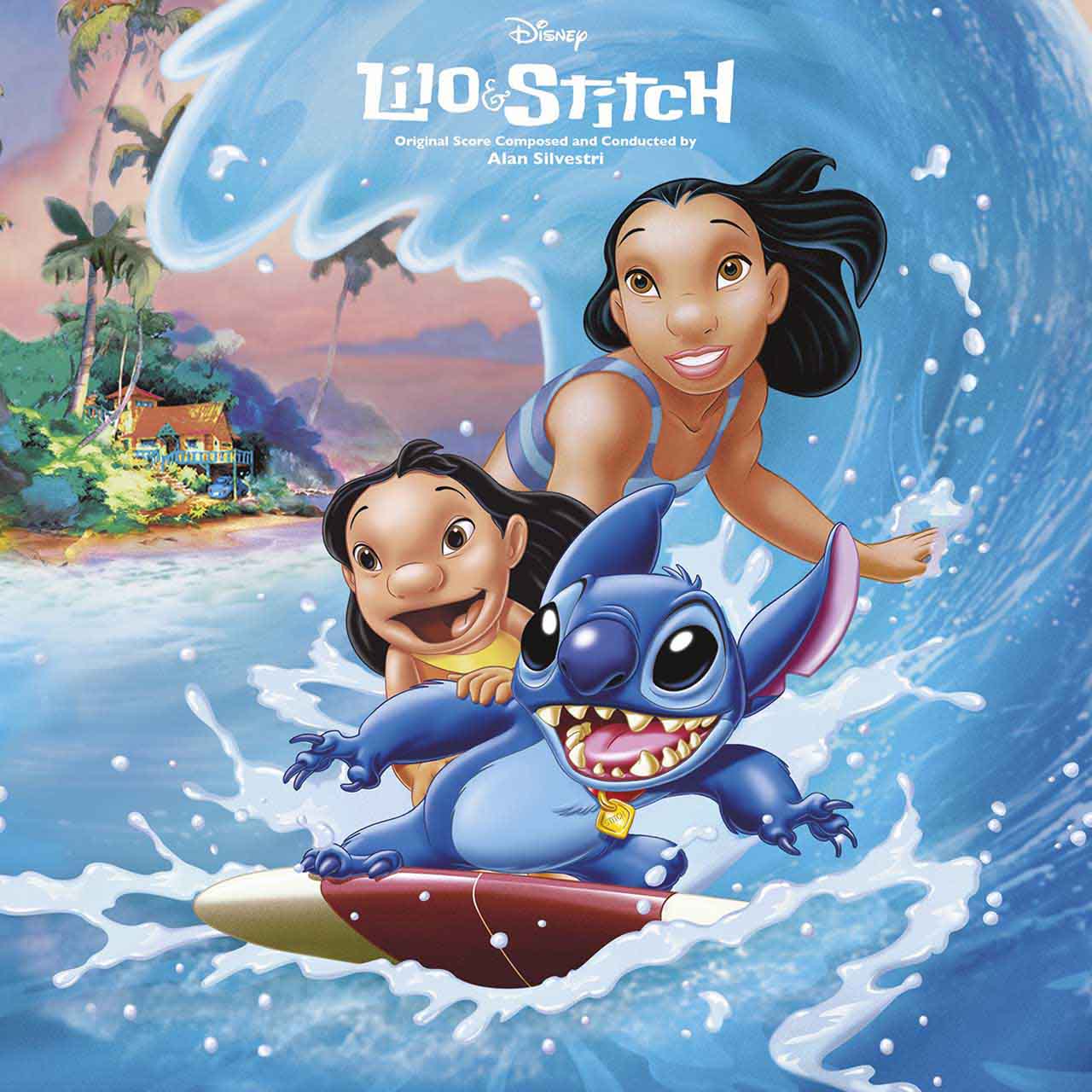
Alan Silvestri composed the film's orchestral score. The score supports the emotional beats of the film without overwhelming them. It shifts between playful cues during Stitch's mischief and gentler themes during the scenes between Lilo and Nani. Silvestri's work gives the film its sense of scale when the story moves from the island to the spacecraft in the climax.
The film and its soundtrack make extensive use of the music of Elvis Presley. Presley's songs appear in the film and on the soundtrack, and they are closely associated with Lilo's taste in music. The choice is part of the film's character design. Lilo is a girl with a strong personality and an unusual musical preference, and the Presley songs help define her.
The marketing campaign used Presley songs as well. In the United States, "Hound Dog" was used in both theatrical and television trailers. In the United Kingdom, a cover of Presley's "Suspicious Minds" performed by Gareth Gates was used in trailers and television advertisements. These choices show how central the songs were to the film's public image.
The soundtrack, Lilo and Stitch: An Original Walt Disney Records Soundtrack, was released by Walt Disney Records on June 11, 2002, on audio CD and compact cassette. The album contains two original songs written by Mark Kealiʻi Hoʻomalu and Alan Silvestri. Those songs were performed by Hoʻomalu and the Kamehameha Schools Children's Chorus, which gives the album a direct connection to Hawaiian musical traditions.
The album also contains five Presley songs and two of his songs re-recorded by contemporary artists. Wynonna performed "Burning Love," and the Swedish group A-Teens performed "Can't Help Falling in Love." The album earned platinum certification from the Recording Industry Association of America on June 23, 2003, for sales of one million units.
The inclusion of Hoʻomalu and the Kamehameha Schools Children's Chorus adds an authentic Hawaiian voice to the album. The songs are sung with the warmth and communal feeling that characterizes Hawaiian choral music. The contrast with the Presley songs gives the soundtrack its distinctive range.
A later track, "Hawaiian Roller Coaster Ride," also received platinum certification from the Recording Industry Association of America on March 17, 2023. That certification shows the continued popularity of the soundtrack more than two decades after the film's release.
In Japan, the theme song for the Japanese version was "Baby You Belong" by Faith Hill. In North America, the song appeared only as an album track and had no direct connection to the film. The international variations show how the same film could be packaged differently for different markets.
The official Disney trailer for the 2025 live-action Lilo and Stitch, directed by Dean Fleischer Camp, with Chris Sanders returning as the voice of Stitch.
The official Disney teaser for the 2025 live-action Lilo and Stitch, introducing Maia Kealoha as Lilo and Sydney Agudong as Nani.
The original 2002 theatrical trailer for the animated Lilo and Stitch from Walt Disney Feature Animation, directed by Chris Sanders and Dean DeBlois.
The production of Lilo and Stitch is a story of creative risk. The film was made in a period when Disney was investing heavily in computer-generated imagery, and the team chose a different path. The result is a film that feels personal, detailed and distinct from other studio productions of its time.
The filmmakers used watercolor-painted backgrounds for Lilo and Stitch rather than the traditional gouache technique used in most Disney features of the era. Watercolors had been used for early Disney shorts and for Snow White and the Seven Dwarfs in 1937, Pinocchio in 1940 and Dumbo in 1941. The technique had largely been abandoned by the mid-1940s. Chris Sanders preferred watercolor because it evokes the bright look of a storybook and recalls the art direction of Dumbo.
Because of this choice, the background artists needed training in the medium. The watercolor backgrounds gave the film a pastel quality and an inviting atmosphere. Critics noticed the technique immediately, and it remains one of the most discussed aspects of the production.
The character designs were based on Sanders's personal drawing style rather than on the traditional Disney in-house style. To help the animators adapt his approach, visual development supervisor Sue C. Nichols created a manual called Surfing the Sanders Style. The manual allowed the animation team to keep the characters consistent with the original designs.
The budget was too small for computer-generated imagery throughout the film, so the animation was based on two-dimensional work. Because the team could not afford shadows in many scenes, much of the film takes place in shaded areas. Shadows were saved for the most important moments. Details such as pockets and clothing designs were also avoided to control the cost of animation.
The team had enough budget for about two additional minutes of animation late in production, and it used that time to create the epilogue montage that shows Lilo, Nani and Stitch becoming a new family.
One altered scene in the film involved Stitch, Nani, Jumba and Pleakley hijacking a Boeing 747 jet from Lihue Airport, which would have scraped against buildings through downtown Honolulu. After the September 11 attacks, with only a few weeks left in production, the climax was reworked. The crew replaced the jet with Jumba's spacecraft, and the location shifted to the mountains of Kauai. The final design still keeps engines that resemble the jet engines of the original concept.
Daveigh Chase won the role of Lilo in the fall of 1998 from a field of 150 candidates. Stitch was initially intended to be nonverbal, but Sanders realized the character needed to speak a few lines, and the team kept his dialogue to a minimum. DeBlois suggested that Sanders voice the character himself, and Sanders used the voice he had long used to play pranks on colleagues at the studio.
Sanders pitched a subversive idea for the film's marketing: what if Stitch invaded other Disney properties? The studio approved the concept, and four parody teaser trailers were made, nicknamed "Inter-stitch-als." In these trailers, Stitch crashes memorable moments from four films of the Disney Renaissance: The Little Mermaid, Beauty and the Beast, Aladdin and The Lion King. Most of the original actors returned to voice their characters in the trailers.
The premiere at the El Capitan Theatre drew the filmmakers, cast members and studio executives. Celebrities including Priscilla Presley, Lisa Marie Presley, Wynonna Judd, Phil Collins, Gregory Hines and Jodie Foster also attended. The film's promotion also included tie-in toys offered as part of McDonald's Happy Meals, and comics that ran in Disney Adventures before the release.
The legacy of Lilo and Stitch extends far beyond its box office performance. The film established Stitch as one of the most recognizable characters in the Disney catalog, produced a long-running franchise and returned to the screen in a live-action adaptation more than two decades later. Its central message about family has become part of its public identity.
The franchise includes three direct-to-video films, three television series, an anime series for Japan, a Chinese animated series and a live-action remake. The Hawaii-based original storyline ended with Leroy and Stitch in 2006, but the character continued to appear in other properties. Stitch later became a summonable character in the Kingdom Hearts series and a playable character in several Disney games and mobile titles.
Three official games were released in 2002 to coincide with the film. They were Disney's Lilo and Stitch: Trouble in Paradise for PlayStation and Microsoft Windows, Disney's Lilo and Stitch for Game Boy Advance, and Disney's Stitch: Experiment 626 for PlayStation 2. Lilo and Stitch later appeared in Disney Magical World on the Nintendo 3DS, and Stitch joined Disney Infinity as a playable character.
The film was released on VHS and DVD on December 3, 2002, and more than three million DVD copies sold on the first day of release. A two-disc special edition followed in Australia in 2004 and in the United Kingdom in 2005. In the United States, the special edition was released on March 24, 2009, as the Big Wave Edition. The film received a Blu-ray release on June 11, 2013, and a 4K Ultra HD release on May 6, 2025, to coincide with the live-action film.
Lilo and Stitch received positive reviews on its release. Critics praised its story, characters, humor and originality, and many highlighted the watercolor backgrounds. Roger Ebert of the Chicago Sun-Times called it one of the most charming feature-length cartoons of recent years. The film's combination of family drama and comedy led many reviewers to describe it as more mature than typical children's animation.
The 2025 remake brought the story to a new generation with a live-action cast. Chris Sanders returned as the voice of Stitch, which connected the new film with the original. Maia Kealoha played Lilo, Sydney Agudong played Nani, and Zach Galifianakis played Jumba. Tia Carrere, the original voice of Nani, was announced to play Mrs. Kekoa, and Amy Hill, who voiced Mrs. Hasagawa in the original, portrayed a new character named Tūtū.
In 2025, the film was one of the titles voted into the Readers' Choice edition of The New York Times list of the 100 best movies of the 21st century, where it finished at number 294. The recognition reflects the film's lasting presence in popular culture, and its status as a classic of the Disney Renaissance era.
A new animated short titled Lilo and Scratch was announced at the 2026 Annecy International Animation Film Festival. Chris Sanders voices Stitch in the project, and Maia Kealoha reprises her role as the voice of Lilo. The announcement confirms that the story of the Pelekai family continues to expand.
Lilo and Stitch was produced by Walt Disney Feature Animation and written and directed by Chris Sanders and Dean DeBlois. Sanders originated the story and the character of Stitch, and he also voices Stitch in the film.
The film premiered at the El Capitan Theatre in Los Angeles on June 16, 2002, and it opened in United States theaters on June 21, 2002.
The story takes place on Kauai, the fourth largest island in the Hawaiian chain. The island setting shapes the film, from the family life of the Pelekai sisters to the Hawaiian music, language and traditions that appear throughout the story.
Stitch is Experiment 626, a genetically engineered alien created by the scientist Dr. Jumba Jookiba. He is designed to cause destruction. Lilo adopts him from an animal shelter, believing he is a dog, and gives him the name Stitch.
Daveigh Chase voices Lilo, Chris Sanders voices Stitch, Tia Carrere voices Nani, and Jason Scott Lee voices David Kawena. David Ogden Stiers voices Jumba, Kevin McDonald voices Pleakley, Ving Rhames voices Cobra Bubbles, Kevin Michael Richardson voices Captain Gantu, and Zoe Caldwell voices the Grand Councilwoman.
Ohana is a Hawaiian word for family, and the film uses it to describe a family that extends beyond blood relatives. Lilo explains the idea with the phrase nobody gets left behind or forgotten, and that principle drives the entire story.
The film was nominated for Best Animated Feature at the 75th Academy Awards. The award went to Spirited Away.
The soundtrack features Elvis Presley songs, including the film's use of "Hound Dog" in its marketing and the Presley recordings used throughout the movie. Alan Silvestri composed the original score, and Mark Kealiʻi Hoʻomalu wrote two original songs with Silvestri for the film.
Yes. A live-action remake directed by Dean Fleischer Camp was released by Disney on May 23, 2025. Chris Sanders returns as the voice of Stitch, and Maia Kealoha plays Lilo.
After the September 11 attacks, with only a few weeks left in production, the climax was reworked. The original sequence had Stitch and his companions use a Boeing 747 jet over Honolulu. The team replaced it with Jumba's spacecraft flying through the mountains of Kauai.
In one scene, Lilo hides in a clothes dryer. For the UK release, the British Board of Film Classification requested a cut to secure a U certificate, and Disney reshot the scene so that Lilo hides in a cupboard. The UK edit later became the standard version across all regions.
The blog contains in-depth articles on the characters, the music, the Hawaiian setting, the franchise and the production history. Start at the blog index to browse every article.
The blog covers every part of Lilo and Stitch in depth. Articles explore the characters, the Hawaiian setting, the music, the production history, the sequels and series, and the live-action remake. Each article is written to give readers a clear, complete account of its subject, with tables, lists and key facts that can be checked against the film.
New articles are published regularly. Open the blog index to see the full list, browse by topic, or read the most recent entries first.
Browse all Lilo and Stitch articles
Experiment 626 is the designation behind Stitch, and knowing it explains why Lilo and Stitch treats its alien hero as both a threat and family.
Lilo and Stitch was followed by a television series and two films, and reading them in release order shows how the franchise grew after the 2002 original.
The 2025 live-action Lilo and Stitch, directed by Dean Fleischer Camp with Maia Kealoha as Lilo, retells the 2002 animated story for new viewers.

Lilo and Stitch, directed by Chris Sanders and Dean DeBlois, showed Disney that a small Hawaiian family story could carry a major animated feature.
Lilo and Stitch still feels fresh because its family story, Hawaiian setting, and mix of humor and grief remain as affecting as they were in 2002.